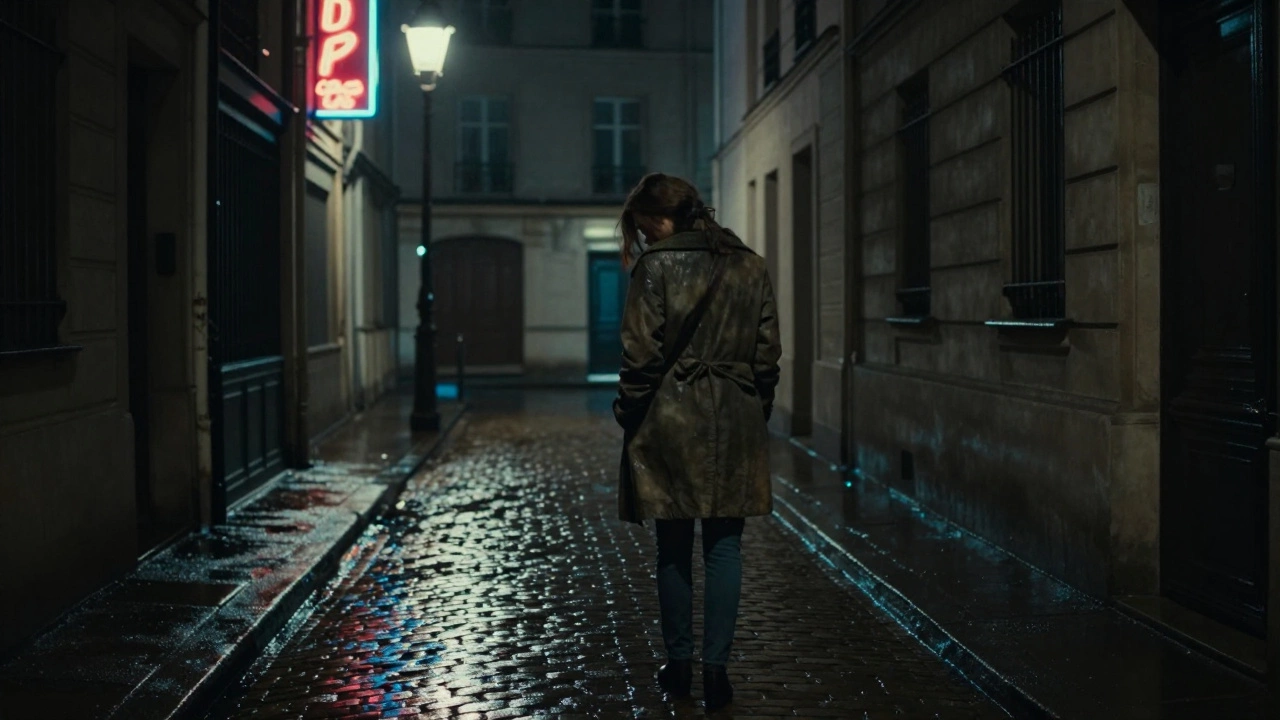
Some stories stick with you because they hurt. Not because they’re shocking, but because they feel true in a way that lingers long after the credits roll. The fictional whore isn’t just a character-she’s a mirror. A tired, repeated image that tells us more about the people writing the story than the person living it. She’s often beautiful, broken, and disposable. Her tragedy isn’t that she’s fallen-it’s that no one ever tries to lift her up. In film, TV, and novels, she’s used as a plot device, a moral compass, or a punchline. Rarely is she allowed to be human.
There’s a strange irony in how often these characters appear alongside real-world exploitation. In Paris, for example, the paris escort girl is sometimes romanticized in pop culture as part of a glamorous, dangerous fantasy. But in fiction, that same image becomes a shortcut for drama: a woman with a past, a secret, a price tag. She’s never the hero. She’s never the one who gets to heal. She’s the reason the male lead changes his ways-or the reason he loses everything. And when her story ends, the audience rarely wonders what happened to her after the final scene.
She’s Not a Trope-She’s a Pattern
Look at any classic tragedy: Ophelia in Hamlet, Magda in The Great Gatsby, or even modern characters like Lila in True Detective. They’re all variations of the same archetype. They’re intelligent, sensual, and deeply wounded. But their pain exists only to serve someone else’s arc. Their deaths are poetic. Their suffering is cinematic. Their lives? Never fully explored.
This isn’t accidental. It’s a formula. Writers use these characters because they’re easy. They don’t need backstory. They don’t need growth. They’re symbols: purity lost, innocence corrupted, desire punished. And the audience? We’re trained to nod along. We feel sorry for her. We curse the men who hurt her. But we rarely ask: why does she exist at all?
The Real Cost of the Fictional Whore
When you keep recycling this image, you’re not just telling stories-you’re shaping beliefs. Real women in France, in cities like Lyon or Marseille, are labeled with the same terms used to describe fictional characters. The phrase euro escort paris might sound like a harmless search term, but in the real world, it carries weight. It reduces people to services, to locations, to transactions. Fiction reinforces that. When a movie shows a woman selling sex as her only option, and the camera lingers on her tears while the protagonist walks away, it doesn’t challenge the system-it normalizes it.
There’s a difference between portraying exploitation and exploiting the portrayal. Many filmmakers claim they’re being ‘realistic.’ But realism without context is just repetition. Real women don’t die dramatically in alleyways to motivate male protagonists. Real women fight to survive, to rebuild, to disappear from the narrative altogether. Yet fiction keeps bringing them back-only to kill them off again.

Breaking the Cycle
Some writers are starting to change this. In recent years, shows like My Brilliant Friend and films like The Worst Person in the World have given women complex inner lives-even when they’re marginalized. One character in a 2024 French indie film, played by Léa Drucker, works as a sex worker to pay for her daughter’s medical care. She’s not tragic. She’s tired. She’s angry. She makes mistakes. And she survives. No one dies for her. No one redeems her. She just keeps going.
That’s the difference. Real stories don’t need death to be powerful. They don’t need a man to save them. They don’t need to be sexy or broken to matter. The fictional whore doesn’t have to be a ghost haunting every third scene. She can be a mother, a student, a mechanic, a writer. She can be anyone. But only if we stop writing her as a prop.

Why This Matters Beyond the Screen
It’s easy to say, ‘It’s just fiction.’ But fiction shapes how we see the world. When every woman who works in sex work is portrayed as either a victim or a villain, we stop seeing the full humanity behind the job. In France, where the law criminalizes clients but not sex workers, real women face stigma, eviction, and violence-not because of their work, but because of the stories we tell about them. The phrase escort girl france is often used in headlines and search results to describe people who are, in reality, trying to survive. Fiction doesn’t just reflect that-it fuels it.
Imagine if every time a woman was introduced in a story, we asked: does she have a future? Does she get to change? Does she get to be boring sometimes? Does she get to live past the climax? If the answer is no, then you’re not writing a character-you’re writing a carcass.
What Can You Do?
Start by noticing. When you watch a movie or read a book, pause when you see this character. Ask: who wrote her? Who benefits from her suffering? What would happen if she didn’t die? If she got a promotion? If she fell in love? If she just… kept living?
Support stories that break the mold. Follow writers who give women full arcs-not just tragic ones. Watch films where the sex worker is the director. Read novels where the protagonist isn’t saved by a fallen woman, but by her own stubborn will.
And if you’re a writer? Don’t write the fictional whore. Write the woman behind her. The one who still buys groceries. The one who calls her mom every Sunday. The one who doesn’t want to be a symbol. She just wants to be seen.